Christmas in Spain is a colourful and welcoming time of year, bringing together family celebrations, traditional food, Christmas markets and beautifully decorated streets. While some customs may feel familiar, the Spanish festive season has its own character, with celebrations continuing through New Year and Three Kings’ Day in January.
From the lively streets of Madrid and Barcelona to the festive atmosphere of Andalusia, you can experience the season in many ways. Whether you are planning a city break or a festive road trip, a little preparation can help you make the most of your Christmas holiday. And if you want to explore beyond the main cities, having a car can make your journey more flexible and convenient. With Final Rentals, you can easily rent a car and explore more of what Spain has to offer.
When does Christmas start and end in Spain?
So, when does Spain celebrate Christmas? The festive season runs from early December to 6 January. Lights, decorations and Christmas markets appear in early December. The main family celebrations begin on Nochebuena, 24 December, and Christmas Day follows. New Year’s Eve brings another round of festivities.
The season ends on Three Kings’ Day, or Día de los Reyes Magos, on 6 January. Children traditionally receive gifts from the Three Kings. For visitors, the colourful parades on the evening of 5 January are a highlight. Unlike in many countries, Spain keeps celebrating well after 25 December.
Spanish Christmas Traditions to Experience

There are several Spanish Christmas traditions that make the festive season distinctive and enjoyable to experience.
El Gordo, the Christmas Lottery
On 22 December, Spain holds El Gordo, the Christmas lottery draw. It is one of the biggest lottery draws in the world by total prize money. Schoolchildren sing out the winning numbers, and the draw is broadcast live on TV and radio. Many families, friends and colleagues buy tickets together, so the day has a festive, shared feel across the country.Christmas Eve and Nochebuena
Nochebuena, or Christmas Eve, is one of the biggest family celebrations of the season. Families typically come together for an evening meal featuring a variety of festive dishes, followed by conversation and celebrations late into the night. For many households, Christmas Eve is more significant than Christmas Day itself, making it a great opportunity to experience traditional Spanish hospitality.
Nativity Scenes
Nativity scenes, known as belenes, are a major part of Christmas decorations in Spain. They can be found in homes, churches, public squares, and other locations, with some towns creating elaborate displays featuring entire traditional villages. Alongside these displays, a Christmas tree in Spain is also a familiar sight in homes, public spaces, and shopping areas, particularly in larger cities.
Three Kings’ Day
Three Kings’ Day is one of the highlights of the Spanish festive season. The celebrations begin the evening before, when towns and cities host colourful parades known as Cabalgatas de Reyes. Featuring music, performers, and decorated floats, these processions bring the Three Kings to the streets, building excitement for children ahead of receiving their gifts the following morning.
The Twelve Grapes
One of the best-known New Year’s Eve traditions in Spain is eating twelve grapes at midnight on New Year’s Eve. Each grape represents one month of the coming year, with people trying to eat all twelve in time with the midnight clock chimes. This tradition is especially famous in Madrid, where large crowds gather around Puerta del Sol to celebrate the arrival of the new year.
What do people eat at Christmas in Spain?
Food is at the heart of Christmas celebrations in Spain, with festive meals varying between regions and families. Popular seasonal treats include turrón, a traditional nougat made with almonds and honey, as well as polvorones and mantecados. Seafood is also common at Christmas meals, while roast meats such as lamb often feature in larger family gatherings.
Another seasonal favourite is Roscón de Reyes, a ring-shaped sweet bread traditionally enjoyed around Three Kings’ Day. These dishes and treats are an important part of Spanish food at Christmas, giving visitors plenty of local flavours to discover during the festive season. Spain food at Christmas changes by region, so you can taste something different in every city you visit.
Christmas Markets in Spain
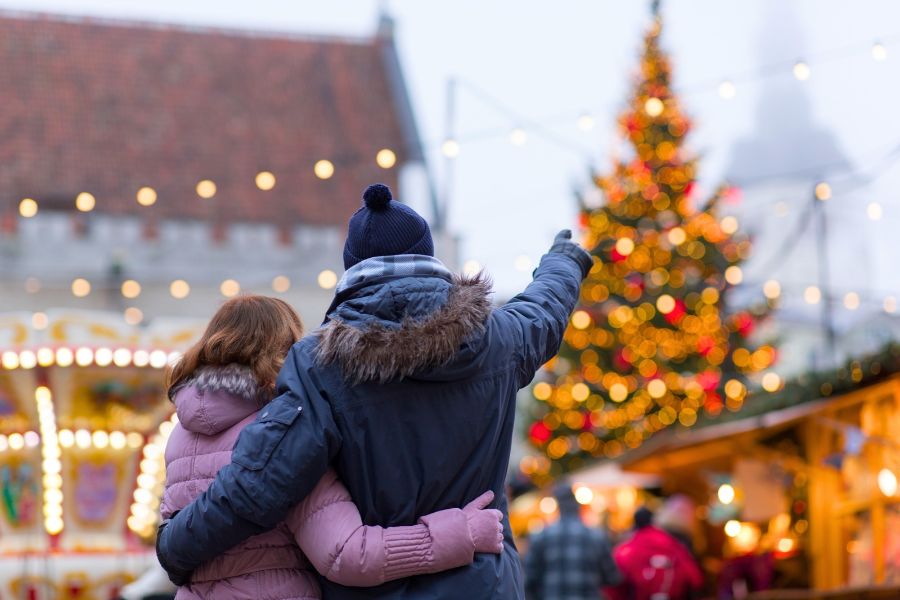
Christmas markets in Spain bring festive food, decorations, crafts and seasonal gifts to city centres and historic neighbourhoods. They are a great way to experience the atmosphere of Christmas while exploring different destinations. Some popular places to find festive markets include:
Barcelona: The Fira de Santa Llúcia, beside the cathedral, is the city’s best-known Christmas market. You will find decorations, nativity figures, and handmade gifts. It usually runs until 23 December.
Madrid: The Plaza Mayor Christmas market has about 100 red wooden stalls selling nativity figures, ornaments and joke masks. Read our guide to the Christmas markets in Madrid for dates, hours and Metro stops.
Málaga: Enjoy Christmas markets alongside the city’s famous festive lights.
Seville: Combine seasonal markets with the city’s historic streets and architecture.
Valencia: Visit festive markets while enjoying the city’s attractions and winter atmosphere.
Market dates and opening hours vary each year, so it is worth checking local information before visiting.
Where is the best place to spend Christmas in Spain?
The best place to spend Christmas in Spain depends on the kind of festive experience you want. Spain offers everything from lively city celebrations and spectacular Christmas lights to quieter historic towns and coastal destinations.
Barcelona
Christmas in Barcelona, Spain combines festive markets, illuminated streets, traditional celebrations, and the city’s distinctive architecture. Visitors can explore Christmas markets, admire decorations around the Gothic Quarter and enjoy seasonal events across the city.
Madrid
Madrid is a great choice for visitors who want a lively Christmas atmosphere. The city centre is filled with Christmas lights, decorated streets and seasonal activities, while Puerta del Sol becomes a focal point for New Year celebrations.
Málaga
Málaga is particularly well known for its spectacular Christmas lights, especially along Calle Larios. The combination of festive decorations, mild winter weather and Andalusian atmosphere makes it an appealing Christmas destination.
Seville
Seville offers a more traditional historic setting for Christmas, with decorated squares, illuminated streets and seasonal events taking place throughout the city centre.
Valencia
Valencia combines festive celebrations with a coastal city atmosphere. Visitors can enjoy Christmas decorations, seasonal markets and local food while exploring the city’s historic and modern attractions.
What’s open and what’s closed at Christmas in Spain?
Opening hours can change considerably during the Christmas period. On 24 and 31 December, many shops and restaurants close early or run shorter hours. Many businesses also close on 25 December, 1 January and 6 January. 26 December is a public holiday in some regions, such as Catalonia, so expect closures there too. Restaurants and tourist attractions may have special schedules.
Public transport generally continues operating in major cities, although services may be reduced on public holidays. Christmas markets and attractions can also have different opening times around Christmas Eve and Christmas Day. If you are visiting during the festive period, check opening hours in advance, particularly if you have specific restaurants, attractions or shops on your itinerary.
Do you need a car for Christmas in Spain?

Getting around Spain at Christmas is relatively easy, with public transport offering a convenient option in major cities such as Madrid, Barcelona and Seville. However, renting a car can be useful if you plan to visit smaller towns, explore the countryside, or travel between several regions during your trip.
Having a car also makes a festive road trip more flexible, especially when visiting places that are less accessible by public transport. With Final Rentals, you can arrange a car for your journey and explore more of Spain during the Christmas season. To make planning and managing your rental easier, you can also download the Final Rentals app from Google Play or the App Store.
Make the Most of Christmas in Spain
Christmas in Spain offers a mix of traditional celebrations, family gatherings, festive food, colourful markets and lively city events. From the Christmas lights of Madrid and Málaga to the historic streets of Seville and Barcelona, there are plenty of ways to enjoy the festive season.
With celebrations continuing until Three Kings’ Day, visitors can experience much more than Christmas Day itself. Whether you are planning a city break or a festive road trip, Spain offers plenty of opportunities to discover its traditions and enjoy the season. Book a car for this holiday season in Spain and enjoy the flexibility to explore its cities, countryside, and charming towns along the way.
Frequently Asked Questions
How is Christmas celebrated in Spain?
The Spanish Christmas season runs from early December to 6 January, with major celebrations on Christmas Eve, Christmas Day, New Year’s Eve and Three Kings’ Day.
When does Spain celebrate Christmas?
Spain celebrates Christmas throughout the festive period, with major celebrations taking place on Christmas Eve, Christmas Day, New Year’s Eve, and Three Kings’ Day on January 6.
What do people eat at Christmas in Spain?
Traditional festive foods include turrón, polvorones, mantecados, seafood, roast meats and Roscón de Reyes.
Where is the best place to spend Christmas in Spain?
Madrid, Barcelona, Málaga, Seville and Valencia are all popular choices, each offering a different festive atmosphere, from spectacular Christmas lights to traditional markets and historic streets.
Do you need a car for Christmas in Spain?
A car is not essential if you are staying in a major city, but it can be useful for exploring smaller towns, countryside areas, and multiple destinations during a Christmas road trip.