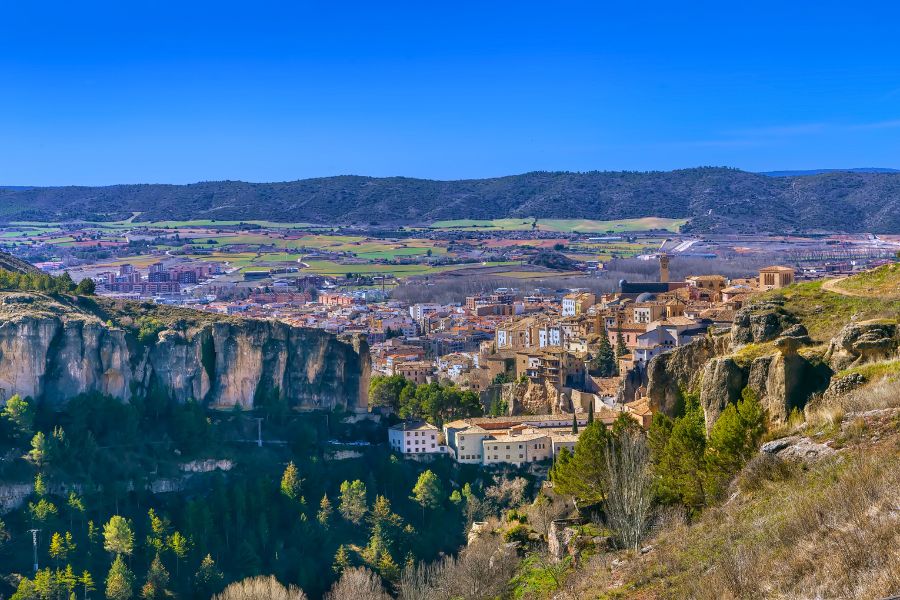
Cuenca, a medieval town dramatically perched above deep river gorges, is one of Spain’s most unforgettable destinations. Set on rugged cliffs in Castilla-La Mancha, the city feels like a hidden jewel where history and nature meet. Its most iconic feature, the Hanging Houses, or Casas Colgadas, are internationally recognised as the Cuenca Spain hanging houses, clinging boldly to the rock face above the Huécar River. With wooden balconies extending over the gorge, these remarkable buildings have fascinated visitors for centuries. Cuenca’s mix of unique architecture, historic streets, and breathtaking views makes it a captivating stop for history lovers, nature enthusiasts, foodies, and photographers alike.
Exploring Cuenca at a relaxed pace is easier when you have the freedom to move around, whether on foot through the old town or by car to reach scenic viewpoints, nearby villages, and natural parks beyond the city. With such a striking location and the famous hanging houses Cuenca Spain, it is worth taking a closer look at where Cuenca is and why its setting makes it so special.

Cuenca is located in central Spain, positioned between Madrid to the west and Valencia to the east. The town is built high on a steep hill, where the Júcar and Huécar rivers have carved deep gorges over thousands of years. These gorges create natural cliffs that support Cuenca’s stone streets, historic buildings, and the dramatic hanging houses in Cuenca Spain. This dramatic landscape gives Cuenca an almost otherworldly appearance, offering stunning panoramic views from countless vantage points throughout the old town.
The height and rugged scenery are key to Cuenca’s unique character, making it stand out from other Spanish towns and an ideal destination for sightseeing and photography. Because Cuenca sits high above the surrounding countryside, travelling by road is the most convenient way to reach it. Many visitors choose to rent a car, allowing them to enjoy the scenic drive and explore nearby areas at their own pace.
Cuenca’s origins trace back to Roman times, though the town truly developed during the Moorish period in the 9th century. The Moors recognised the defensive advantages of the rocky terrain and built strong fortifications that helped protect the settlement. When the Christians, led by King Alfonso VIII of Castile, reconquered Cuenca in 1177, the town became an important centre for trade and culture in medieval Spain, with its cliffside homes eventually evolving into what we now know as the hanging houses Cuenca.
Despite periods of decline, the historic core of Cuenca remained largely intact, untouched by industrialisation and modern development. Because of this, the old town today feels like a journey back in time, with narrow cobbled streets, ancient churches, plazas, and stone houses that reveal centuries of history. Much of the medieval architecture has been carefully preserved, making Cuenca one of the most authentic historic towns in Spain.
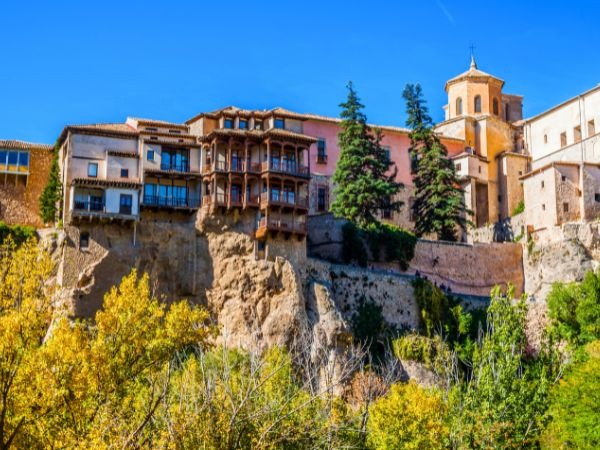
The Cuenca hanging houses are the town’s most iconic landmark. These extraordinary structures appear to defy gravity as they cling to the side of the steep Huécar gorge. In medieval times, similar houses were common around the town’s cliffs, but today only a few remain. The surviving buildings, with their cantilevered wooden balconies reaching over the void, are a breathtaking sight and have become a lasting symbol of Cuenca.
The Hanging Houses were originally built as homes and storage spaces during the 14th and 15th centuries. With limited space inside the medieval walls, builders extended structures outwards over the cliff edge to create additional room. Heavy wooden beams were anchored deep into the rock, allowing balconies to project outward while remaining stable. This design not only saved space but also allowed more light and air into the homes. The houses have survived centuries of weather and change, proving the strength and ingenuity of their construction.
Today, only a small number of the Hanging Houses remain, but they continue to play an active role in Cuenca’s cultural life. One of the houses contains a traditional restaurant, and two other houses house the Museum of Spanish Abstract Art, which displays an impressive collection of modern artwork within a historic setting. Walking paths and viewpoints around the old town offer excellent perspectives of the hanging houses of Cuenca, especially from the famous San Pablo Bridge.
The Hanging Houses are best seen from the nearby walking paths and from the famous San Pablo Bridge. These locations offer open, unobstructed views of the houses hanging over the gorge. The scene becomes even more striking at sunset, when the stone walls are bathed in warm, golden light.
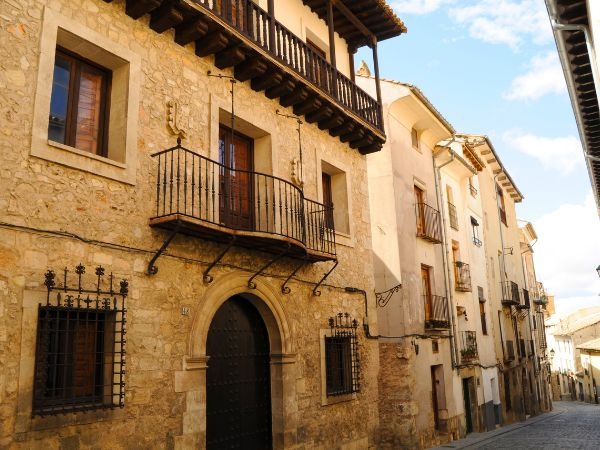
Cuenca’s historic centre has been recognised as a UNESCO World Heritage Site because of its outstanding preservation and architectural value. The old town is a maze of narrow streets, steep stairways, and hidden squares where time seems to slow down. As you walk through the area, you’ll pass centuries-old buildings, quiet courtyards, and small shops selling local products.
The old town reflects a blend of Romanesque, Gothic, and Renaissance influences, showing how Cuenca evolved through different historical periods. Exploring this area on foot allows you to fully appreciate its character, atmosphere, and sense of history.
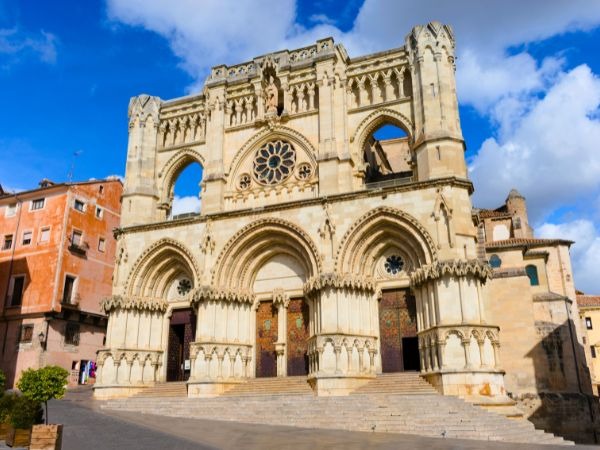
The Cathedral of Santa María y San Julián is one of the oldest Gothic cathedrals in Spain and stands proudly at the heart of the old town. Built shortly after the Christian reconquest, the cathedral showcases impressive Gothic architecture with later additions from different periods. Its exterior features detailed stonework, while the interior offers a calm and reflective space filled with chapels, altars, and religious art.
Visitors often admire the cathedral’s high ceilings, stained glass windows, and carefully carved details. A visit here offers insight into the historical significance of Cuenca's religious and cultural importance.
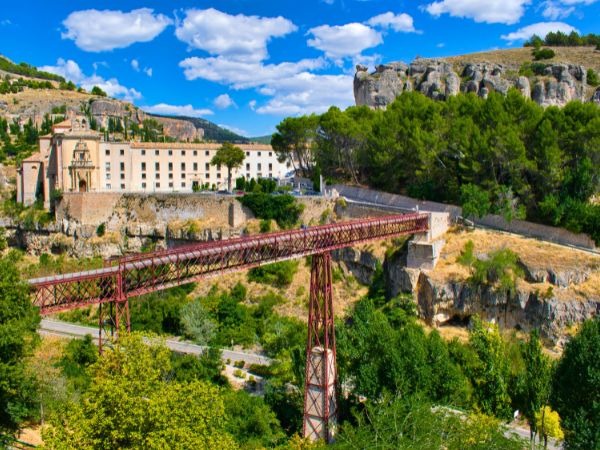
San Pablo Bridge is one of the most memorable spots in Cuenca. This iron and wooden footbridge crosses the Huécar gorge and offers stunning views of the Hanging Houses and the surrounding cliffs. Standing on the bridge, you can see the river far below and the dramatic rock formations that define the town’s landscape.
The bridge is especially popular at sunrise and sunset, when the light enhances the beauty of the houses and the gorge. It is an ideal place for photography, quiet moments, and appreciating Cuenca’s unique setting.
Cuenca is surrounded by impressive natural landscapes that complement its historic charm. The Huécar and Júcar gorges offer walking paths and viewpoints where visitors can enjoy fresh air, greenery, and dramatic scenery. These areas are ideal for hiking, relaxing walks, and connecting with nature, just minutes from the town centre.
The Ciudad Encantada, or Enchanted City, is a natural area famous for its unusual rock formations shaped by wind and water over millions of years. The rocks resemble animals, faces, and objects, creating a magical environment that fascinates visitors of all ages. Reaching these natural attractions is much easier when you rent a car, as they are located outside the town and are not easily accessible by public transport.
Cuenca’s cuisine reflects the traditions of Castilla-La Mancha and is known for its rich, comforting flavours. Local dishes often feature meat, garlic, olive oil, and seasonal ingredients. Traditional specialities include morteruelo, a hearty meat pâté, and ajoarriero, a dish made with salted cod, potatoes, and garlic.
For dessert, alajú is a popular sweet treat made with honey and nuts. Dining in Cuenca is a memorable experience, especially in restaurants located near the Hanging Houses or within historic buildings. Many offer scenic views that add to the enjoyment of the meal.
The best times to visit Cuenca are spring and autumn, when temperatures are mild and pleasant for sightseeing. During these seasons, the surrounding landscapes are especially beautiful, and the town is less crowded. Summer can be warm, particularly in the afternoons, while winter is colder but quieter, offering a peaceful atmosphere for exploring museums and historic sites.
Cuenca can be reached by train or bus from major Spanish cities, but public transport limits your ability to explore the surrounding countryside. Driving allows you to enjoy scenic routes and visit nearby attractions that are otherwise difficult to reach. For this reason, many visitors prefer to rent a car for greater comfort and freedom during their stay.

Selecting the right car hire service can make your trip much easier and more enjoyable. Rent a car with Final Rentals for a reliable, stress-free journey from start to finish. Final Rentals provides a wide variety of vehicles, from compact cars perfect for city driving to larger models suited for families or longer road trips. Pricing is clear and transparent, with no hidden fees, and bookings include flexible cancellation options.
Final Rentals operates across Spain, including major airports, such as Adolfo Suarez Barajas Airport in Madrid, and city locations, making pick-up and drop-off simple and convenient. With 24/7 customer support and an easy-to-use booking process, Final Rentals ensures peace of mind throughout every journey. Whether exploring Cuenca’s medieval streets or travelling to nearby natural parks, a Final Rentals car provides the flexibility to travel on your own terms. For helpful advice on getting the most from your rental, see this Essential Car Rental Tips for First-Time Drivers in Spain.
Driving in Spain is straightforward for most travellers, but knowing a few key tips can make your journey smoother and safer. From road conditions to local driving rules, understanding these basics will help you navigate both cities and the countryside with confidence.
Cuenca offers a variety of accommodation options to suit different budgets and travel styles. Staying in the old town allows you to be close to major attractions, while hotels in newer areas often provide easier parking. Rural guesthouses outside the town offer peaceful surroundings and scenic views, especially convenient if you rent a car in Spain.
Start your journey today and experience Cuenca without limits. Rent a Car in Spain with Final Rentals for flexible travel, reliable service, and total peace of mind. For added convenience, remember to download the Final Rentals app on Google Play or the App Store so you can manage your booking and travel details anytime, anywhere. Explore Cuenca and the surrounding landscapes at your own pace and make every moment of your trip unforgettable!